

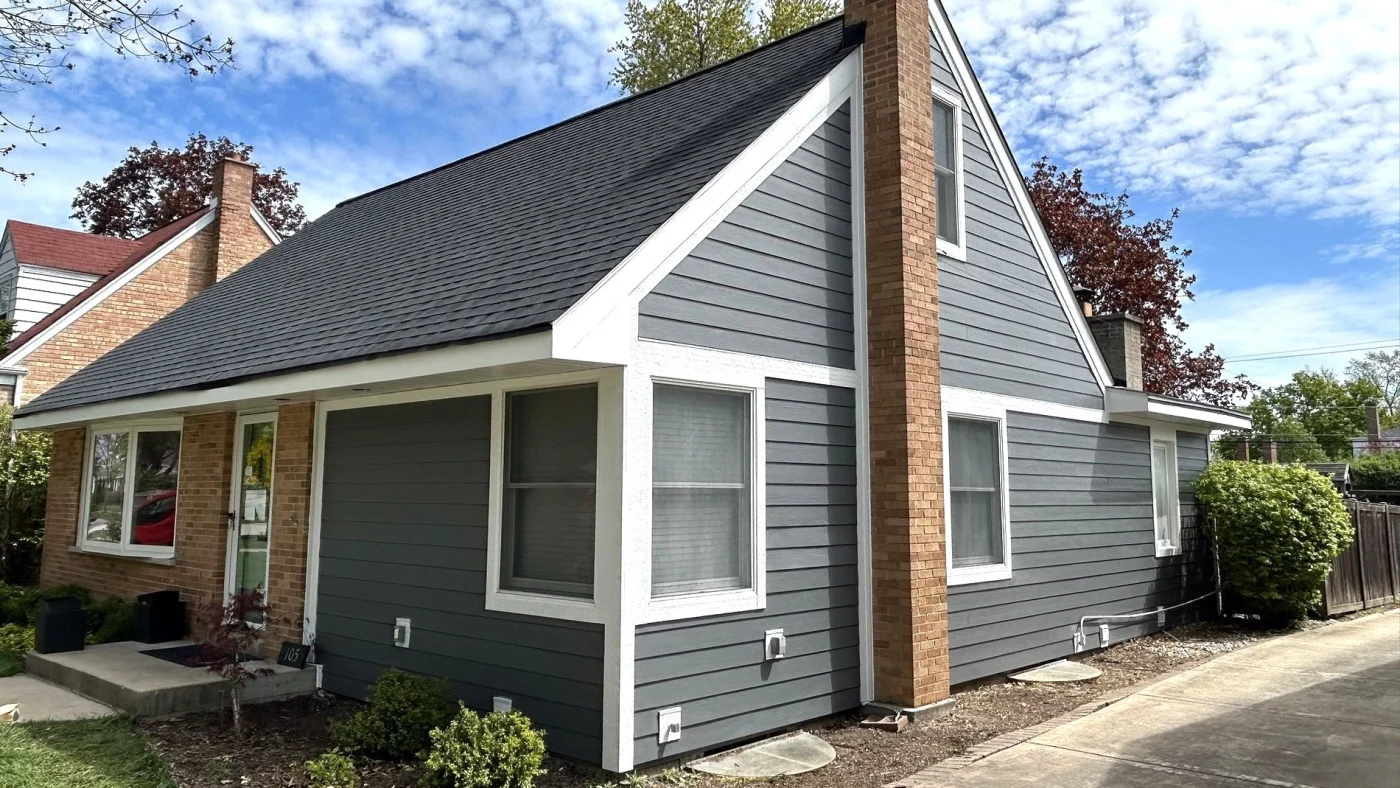
Vinyl siding typically lasts about 20 to 40 years, depending on the product and other conditions. A well-made product that is installed correctly and cared for can sometimes remain serviceable longer.
There is no single age when every home needs new siding. Product quality, installation, and weather exposure all affect how long your siding will perform.
For homeowners in South Elgin and throughout Chicagoland, local weather adds another important variable.
So, how long does vinyl siding last on a particular home? The best answer comes from looking at the condition of the entire exterior system rather than simply checking the installation date.
What Affects How Long Vinyl Siding Lasts?
The biggest factors are installation quality, weather exposure, material quality, and routine care. Each one can either help siding perform for decades or contribute to problems earlier than expected. Let’s look at each one.
Installation Quality
Vinyl expands and contracts as outdoor temperatures change. That makes correct installation especially important in Chicagoland, where exterior materials can experience wide temperature swings throughout the year.
Panels must be fastened properly and installed with enough room to move as temperatures rise and fall. If they are fastened too tightly or installed incorrectly, they may buckle, warp, or pull out of place.
Good installation also includes attention to water management. Areas around windows, doors, penetrations, trim, and roof-to-wall connections must be handled carefully so water is directed away from the wall assembly.
Poor installation can shorten the life of even a high-quality product.
At Apex Exteriors, residential projects are completed by our trained, full-time, in-house crews rather than subcontractors. That helps us maintain consistent installation standards from one project to the next.
Chicagoland Weather and Exposure
Our local climate gives siding plenty to deal with.
Winter brings freezing temperatures, snow, and ice. Spring and summer can bring thunderstorms, strong winds, and hail. Summer heat and direct sunlight also affect the exterior over time.
UV exposure can contribute to fading and gradual material deterioration. Extreme heat can cause vinyl to warp or deform in some situations. Hail and flying debris can crack or puncture panels, particularly as older material becomes more brittle.
Even different sides of the same house may age differently. A south- or west-facing wall may receive more direct sunlight, while another side may stay shaded or be exposed to more wind and moisture.
Storm damage does not automatically mean the entire siding system has reached the end of its life. Sometimes damage is localized and can be repaired.
Vinyl Siding Quality
Not all vinyl products are built the same way. Panel thickness varies from product to product.
Thickness can play a role in durability, but it is not the only measure of quality. Product design, manufacturing standards, impact resistance, color technology, and proper installation all matter.
Higher-quality siding may offer better resistance to cracking, warping, fading, and impact damage. Insulated vinyl siding has added insulation behind each panel, which can help keep your home more comfortable and improve energy efficiency.
Color can matter, too. Darker colors typically absorb more solar heat than lighter colors, although modern products are designed with that exposure in mind.
While the right siding should fit your budget and appearance goals, choosing the lowest-priced option without considering performance can cost more in the long run.
Maintenance and Timely Repairs
Vinyl siding is low maintenance, but low maintenance does not mean no maintenance.
Homeowners should periodically look for cracks, loose panels, buckling, impact damage, and other visible changes. It is especially smart to inspect your exterior after hail, strong winds, or other severe weather.
Cleaning is usually straightforward. Wash away dirt, grime, algae, or mildew as needed using methods recommended for the product. Be careful with aggressive pressure washing, which can damage panels or force water behind the siding when used improperly.
Keep shrubs and tree branches from rubbing against the exterior, and make sure gutters and downspouts are directing water where they should.
Small repairs are also worth addressing sooner rather than later. One loose or cracked panel is generally easier to deal with before nearby areas are affected.
6 Signs Your Vinyl Siding May Need to Be Replaced
A single cosmetic flaw does not necessarily mean you need new siding. What matters is the type, extent, and cause of the problem.
Here are six signs that may point toward replacement:
- Widespread cracking or broken panels
- Warping or buckling
- Loose or missing panels
- Significant fading or deterioration
- Frequent repairs
- Signs of moisture behind the siding
A good contractor should first determine whether the problem is isolated or part of a broader issue.
Can Vinyl Siding Last 40 Years or Longer?
Yes. Some vinyl siding can remain functional for 40 years or even longer.
That does not mean every product will reach that age. Longevity depends on the quality of the siding, how it was installed, the home’s exposure, how well it has been maintained, and whether it has suffered damage over time.
A 40-year-old siding system should not automatically be condemned based on age alone. If it is still secure, performing properly, and protecting the home, it may have useful life remaining.
The opposite is also true. Newer siding can need repairs or replacement if it has widespread damage or installation problems.
Condition matters more than the number on the calendar.
Should You Repair or Replace Vinyl Siding?
Residential siding repair is often reasonable when damage is limited to a small section. A few cracked, loose, or missing panels may be replaceable if the surrounding system is sound and compatible material is available.
Matching can become more difficult as siding ages. Older colors may have faded, and some product lines may no longer be manufactured.
Replacing vinyl siding may make more sense when damage is widespread, the material has become brittle, repairs keep recurring, or inspection reveals broader moisture or installation concerns.
Replacement may also be appropriate when homeowners want to update the appearance or overall performance of the exterior.
When siding is removed, accessible sheathing and other underlying components should be evaluated. New siding should not simply cover an existing problem.
At Apex Exteriors, our goal is to help homeowners determine what their house actually needs. Sometimes that means repair. Sometimes it means replacement. And sometimes it means keeping an eye on a system that still has years of useful life ahead.
How Can You Help Vinyl Siding Last Longer?
A few simple habits can help you get more from your siding:
- Inspect it periodically, especially after severe weather.
- Repair cracked, loose, or damaged panels promptly.
- Clean away dirt, mildew, algae, and grime when needed.
- Avoid aggressive pressure washing.
- Keep branches and shrubs from scraping the exterior.
- Maintain gutters, downspouts, flashing, and drainage.
- Have recurring or unexplained problems professionally evaluated.
Routine attention also makes it easier to identify small problems before they spread.
What Happens During a Professional Siding Inspection?
A siding inspection should look at more than whether the panels still look good from the street.
A contractor may check for cracking, warping, buckling, looseness, hail damage, missing panels, and other visible problems. Corners, seams, trim, penetrations, windows, doors, and transitions should also be evaluated.
The inspection may also look for signs of installation problems or moisture getting behind the siding.
From there, the contractor should determine whether the issue appears isolated or widespread and explain whether repair or replacement is the more sensible option.
An inspection cannot put an exact expiration date on your siding, but it can provide a much better understanding of its current condition.
Frequently Asked Questions About Vinyl Siding
How often should vinyl siding be replaced?
There is no fixed replacement schedule. Many systems last 20 to 40 years, while some perform longer. Replace siding based on its condition, performance, and extent of damage rather than age alone.
Can vinyl siding last 40 years?
Yes. High-quality siding that was installed properly and has been well maintained can sometimes remain functional for 40 years or longer.
Can vinyl siding be painted?
In some situations, yes. The existing siding should be in suitable condition, and the paint must be compatible with vinyl. Color choice and manufacturer warranty requirements also matter, so check those details before painting.
Will vinyl siding melt or warp near heat?
Excessive heat can deform vinyl. Grills, fire features, and concentrated or reflected heat should be kept a safe distance from the siding.
Not Sure How Much Life Your Siding Has Left? Ask Apex Exteriors
If you are wondering how much life your Chicagoland home’s vinyl siding has left, you do not have to guess.
Apex Exteriors has more than 30 years of local roofing and siding experience. From our South Elgin location, we serve homeowners throughout the greater Chicagoland area.
Schedule a consultation with Apex Exteriors to have your siding evaluated and get straightforward guidance on the next step.

