

When a roof starts showing its age, homeowners often face a basic choice: cover the existing shingles with a new layer or remove the old roof and start over. The roof overlay vs. replacement decision can affect cost, project time, warranties, and how well-hidden damage is addressed.
For Chicagoland homeowners, that choice deserves careful thought. Roofs here deal with large temperature swings. A roof that looks acceptable from the driveway may still have worn shingles, moisture problems, or damaged decking underneath.
The fastest or least expensive option is not always the best fit. Before choosing, consider:
- The roof’s age
- Existing layers
- Deck condition
- Leaks
- Storm damage
- How long you plan to stay in the home
Apex Exteriors has worked on residential roofs throughout the greater Chicagoland area for decades, and the first step is understanding what the roof needs.
What Is a Roof Overlay?
A roof overlay, sometimes called a re-roof, places a new layer of asphalt shingles over an existing layer. The old shingles stay on the roof instead of being removed down to the deck.
A contractor inspects the roof to see whether an overlay is possible. The shingles should be reasonably flat and stable. There should be no signs of active leaks, widespread deterioration, or structural trouble. The surface is prepared, accessible flashing is addressed as needed, and new shingles are installed over the existing layer.
Overlays are mainly associated with asphalt-shingle roofs. The biggest limitation is visibility: because the old roofing stays in place, the contractor cannot fully inspect potentially hidden problems beneath the existing shingles.
Local code and manufacturer requirements matter too. Some roofs already have too many layers, and some products may have installation rules that make an overlay a poor choice. A roofing contractor should confirm those details before recommending the work.
When Might an Overlay Make Sense?
An overlay may make sense when the roof has only one acceptable shingle layer, the structure appears sound, and there are no known leaks or deck problems. Overlays can also appeal to homeowners focused on lower short-term costs. Even then, the roof should be inspected first. A lower upfront price does not help much if the new shingles cover a problem that still needs to be repaired later.
What Is a Full Roof Replacement?
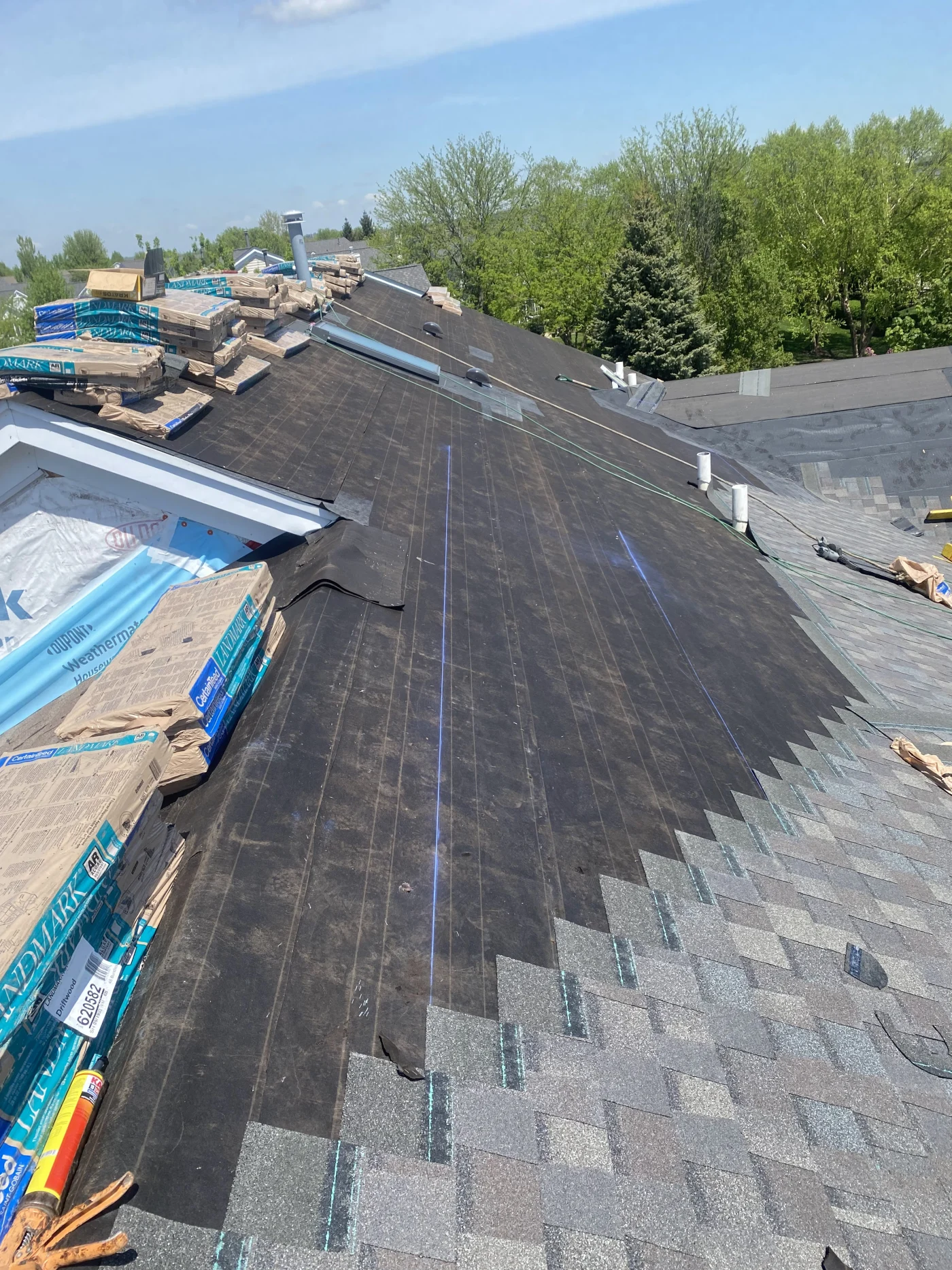
A full roof replacement, or roof tear-off, removes the existing roofing materials before the new system is installed. This gives the contractor direct access to the roof deck and creates a clean starting point for the new roof.
The process starts by protecting areas around the home. The crew removes old roofing, disposes of debris, and exposes the deck. Damaged sheathing can then be replaced. Next come the roofing-system components, new roofing material, flashing, and ventilation details. After a thorough cleanup, contractors conduct a final review.
That deck inspection is one of the most significant differences between a replacement and an overlay. A tear-off can reveal rot, old leaks, or shortcuts from a prior installation. Those problems can be corrected before they are covered by the new system.
Replacement requires more labor and debris disposal, so it usually costs more upfront. However, it gives homeowners a clearer view of the roof’s condition and a stronger base for long-term performance. Apex uses full-time, in-house crews on residential projects.
Roof Overlay vs. Replacement: Key Differences
| Factor | Roof Overlay | Full Roof Replacement |
|---|---|---|
| Existing roofing | Remains in place | Removed |
| Upfront cost | Generally lower | Generally higher |
| Labor | Less extensive | More extensive |
| Project time | Often shorter | Typically longer |
| Deck inspection | Limited | Full deck exposed |
| Hidden damage | May remain concealed | Can be identified and repaired |
| Added roof weight | Yes | No |
| Long-term approach | More limited | More comprehensive |
| Material disposal | Less | More |
| Warranty considerations | May be more restrictive | Often better suited to full-system warranty requirements |
Cost
An overlay usually costs less at the start because there is less tear-off labor and less material to haul away. A full replacement includes removal, disposal, deck inspection, and any needed deck repairs, so the initial price is normally higher. That does not mean every overlay is a bargain or every replacement is expensive. Roof size, material choice, and existing damage all affect the final estimate.
Project Time and Disruption
An overlay often moves faster because the crew skips most tear-off work. A full replacement has more steps and can take longer if deck repairs are needed. Weather can affect either schedule, so a responsible contractor should give you a realistic timeline instead of a blanket promise.
Roof Condition and Hidden Damage
This is where the two options differ most. An overlay covers the existing roof, which limits access to the deck. A tear-off exposes that surface so soft or damaged areas can be found and repaired before the new roofing goes on.
Longevity
A full replacement starts with an exposed and inspected deck; it generally offers a stronger long-term starting point than installing new shingles over aging materials.
Pros and Cons of a Roof Overlay
Advantages
The main advantage is lower initial cost when the roof qualifies. There is less removal work, less debris to dispose of, and often less time spent on the job. For a sound roof with one existing layer and no known moisture trouble, that can make an overlay practical in some cases.
Disadvantages
The tradeoff is limited visibility. The old roofing remains underneath, so the deck cannot be fully inspected. Existing moisture or deterioration may stay hidden, and the added layer puts more weight on the roof structure. Local code or manufacturer requirements may also limit the option. For homeowners planning to keep the house for many years, those limits can make a full replacement more attractive.
Pros and Cons of a Full Roof Replacement
Advantages
A full replacement gives the crew complete access to the roof deck. Damaged sheathing can be replaced, old materials are removed, and the new system starts on a prepared base. It also allows homeowners more flexibility to change materials or performance levels. For an older or badly damaged roof, that approach often makes better long-term sense.
Considerations
The main drawbacks are cost, labor, and disposal. Tear-off creates more debris and takes more time than covering the existing shingles. If hidden deck damage appears, the project may also need additional repair work. Those extra steps are part of what makes replacement more complete, so estimates should clearly explain what is included and how unexpected deck repairs will be handled.
When Should You Choose an Overlay vs. Roof Replacement?
An Overlay May Be Worth Considering When:
An overlay may fit when there is one acceptable shingle layer, the roof is structurally sound, and there are no signs of active leakage or deterioration. Local rules and manufacturer requirements must also allow it. In those conditions, lower short-term cost may justify the tradeoffs.
A Full Replacement Is Usually the Better Choice When:
Replacement becomes the stronger option when the roof shows any of the following:
- Widespread deterioration
- Recurring leaks
- Curling or missing shingles
- Suspected rot
- Soft decking
- Storm damage that affects a large area
It also makes sense when existing layers prevent another installation or when the homeowner wants to switch to a different roofing material.
Long-term plans matter as well. If you expect to stay in the home for years, paying more upfront for a clean tear-off and full deck inspection can reduce uncertainty.
Roofing Materials and Why They Affect the Decision
Most roof-overlay discussions center on asphalt shingles because other roofing systems have different installation requirements. A full replacement gives homeowners much more freedom to rethink the roof instead of staying tied to the existing surface.
Our team installs asphalt shingles, synthetic composites, and other materials only where appropriate. A good contractor should narrow those choices based on the home, not just appearance.
What About Roof Warranties, Insurance, and Financing?
Manufacturer Warranties
Warranty terms vary by manufacturer, product, and installation method. An overlay does not automatically void every warranty, but some products have requirements that favor a tear-off. Ask how the proposed installation affects the specific warranty.
Insurance Claims
If storm damage is driving the decision, document the roof condition early. Photos, inspection notes, and a clear work scope can help with the construction side of the claim. Our company offers in-house claims experts who help property owners navigate the process, while the carrier makes the final coverage decision.
Financing
A full replacement can be a larger upfront investment. Homeowners can consider financing rather than choosing an overlay only because it looks cheaper today. Apex offers financing options for exterior remodeling projects.
Questions to Ask Before Deciding
- How many roofing layers are already installed?
- What condition are the existing shingles and roof deck in?
- Are there active leaks or signs of past moisture damage?
- Does the roof meet local and manufacturer requirements for an overlay?
- How would each option affect the product warranty?
- What does each estimate include for removal, disposal, and deck repair?
- How long do I expect to own the home?
Ask for clear, written scopes so you can compare the actual work instead of comparing only the bottom-line price. A lower estimate can leave out important steps, while a higher estimate may include work that another quote does not address.
Frequently Asked Questions About Roof Overlay vs. Replacement
Q: Can You Put a New Roof Over an Existing Roof?
Sometimes. A roof may qualify if it has only one acceptable existing layer, remains structurally sound, and has no signs of serious leakage or deck damage. Local requirements and manufacturer installation rules also apply, so the roof needs to be evaluated before work begins.
Q: Is a Roof Overlay Cheaper Than a Replacement?
Usually, yes. An overlay involves less removal labor and less disposal, which can reduce the initial cost. The better question is whether the roof is a viable candidate. Covering a weak or leaking roof can lead to more expense later if hidden problems still need attention.
Q: Can an Overlay Hide Roof Damage?
Yes. Because the existing roof stays in place, the contractor cannot inspect the entire deck from above. Some damage may be visible from the attic or other areas, but a tear-off provides much better access to the sheathing and underlying roof structure.
Q: Does a Roof Overlay Last as Long as a Full Replacement?
There is no single lifespan that applies to every roof. The condition of the existing roof, the materials used, and the quality of the installation all matter. A full replacement has the advantage of starting with an exposed, inspected, and repaired deck, which gives the new roofing system a cleaner long-term foundation.
Start With a Professional Roof Inspection
Start with the roof’s condition, not just the first estimate. If the shingles are stable and the deck appears sound, an overlay may be worth discussing. If there are leaks, hidden damage, or an aging roof that keeps needing repairs, a tear-off may be the smarter investment.
Apex Exteriors is based in South Elgin and has served property owners throughout the Chicagoland area for decades. Residential roofing work is completed by full-time, in-house crews, and we are a CertainTeed ShingleMaster contractor. Our team handles repairs and complete replacements with a focus on clear recommendations.
If you are not sure what your roof needs, schedule a consultation with Apex Exteriors. We will inspect the roof, explain what we find, and help you compare the options without turning a roofing question into a sales pitch. The goal is simple: fix what needs fixing and choose the approach that makes sense for your home and budget.

