

Many homeowners don’t know exactly when their roof was installed, especially if the work was completed before they bought the home. That can make it harder to judge how much useful life may remain or when repairs or replacement might become necessary.
Knowing the approximate age of the roof can help with maintenance planning, insurance questions, and future home sales. In some cases, the installation date is easy to find in home improvement records or permits.
If records do not provide a clear answer, a professional roof inspection can help homeowners estimate the roof’s age and identify current concerns. Apex Exteriors has nearly 40 years of experience working on roofs throughout the Chicagoland area.
How to Find Out How Old Your Roof Is
Start with the paper trail. Home improvement records, contractor invoices, warranty documents, and closing paperwork may include the roof’s installation date or at least narrow down when the work was completed.
A home inspection report can help, particularly if the house changed owners recently. Inspectors sometimes note the roof’s estimated age, condition, or visible signs of previous replacement. Local building records may provide another clue because roofing work often appears in permit history.
Those records are most useful when they identify the contractor and scope of work. A date by itself needs context because the job may have involved a repair rather than a complete replacement. Comparing the record with invoices, warranties, or inspection reports can help confirm what was actually done.
Closing documents and seller disclosures may provide additional information, especially if the roof was replaced not long before the home changed hands. Even without an exact installation date, they may identify a prior contractor, warranty, or improvement that can be traced further.
If the paperwork still does not settle the question, try contacting the previous owner or real estate agent. They may have receipts, disclosures, or contractor information that did not make it into the current homeowner’s files. Historical aerial photos or older listing photos can sometimes help confirm when the roof’s appearance changed, though they are better used as supporting evidence than as proof of an exact date.
What the Condition of the Roof Can Tell You
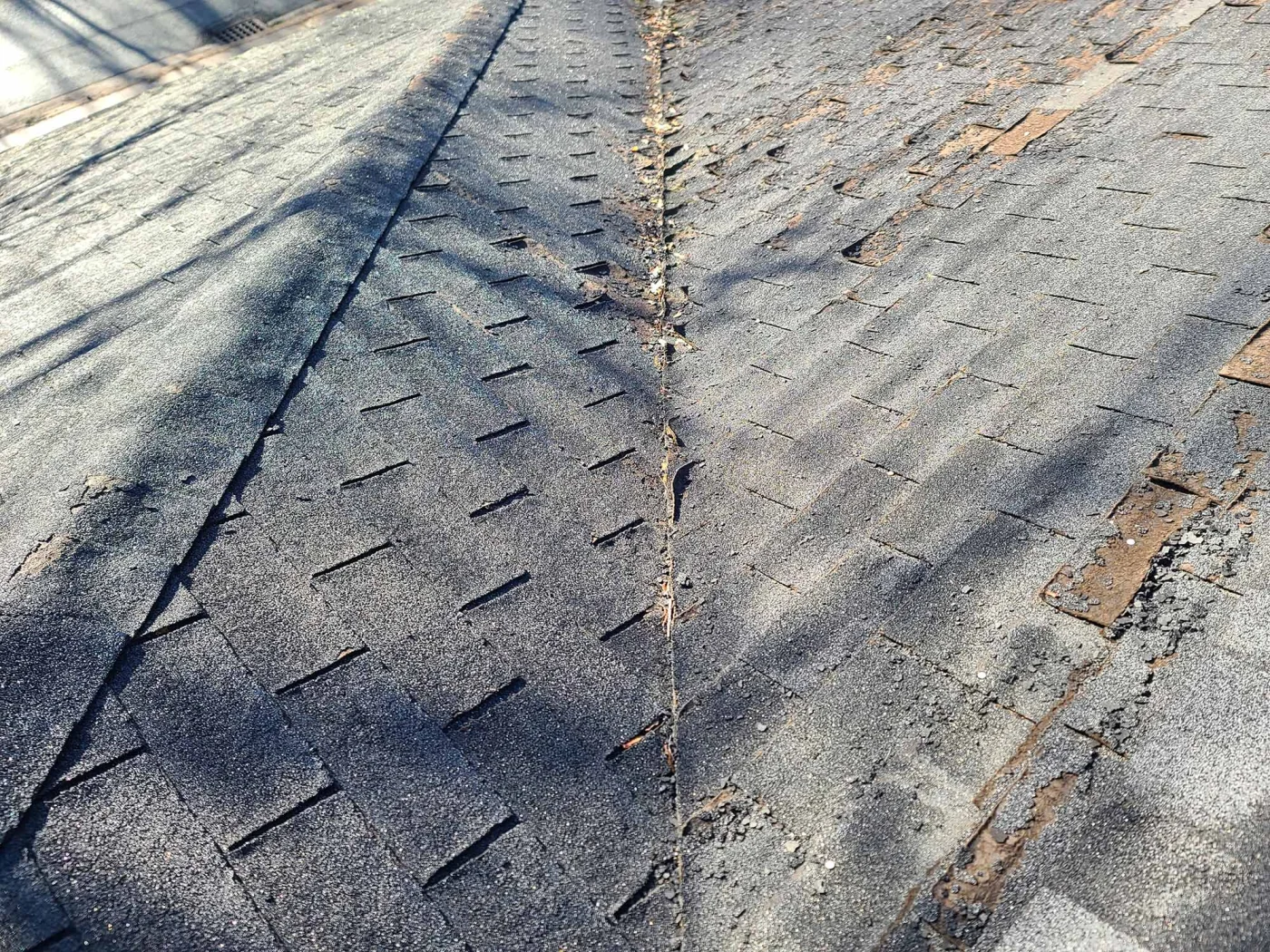
When records do not reveal the roof’s age, its physical state can help narrow the estimate. Asphalt shingles may begin to curl or shed granules as they age, and missing shingles can point to wear or weather damage. Flashing around chimneys, vents, and other roof penetrations may crack or rust as the system deteriorates.
In the attic, water stains or damp insulation may indicate a leak, while daylight showing through roof boards can signal gaps or deterioration. A sagging roofline is another reason to have the roof evaluated promptly.
Moss can trap moisture against the roofing surface and may contribute to deterioration if it remains in place. Like other visible signs of wear, it can help evaluate the roof’s condition, but it doesn’t establish an exact age.
Weather exposure, shade, ventilation, and installation quality can make two roofs of the same age look very different. Visible wear is more useful for judging current performance than proving an exact installation date.
An older roof may still be performing well, while a newer one can develop problems because of poor installation, inadequate ventilation, maintenance issues, or severe weather. When the roof’s history is unclear, a professional roof inspection can help estimate its age and identify concerns that need attention.
How Roofing Material Affects Expected Lifespan
The age of a roof is easier to interpret once you know what material it is made from. Asphalt shingles generally have a shorter expected lifespan than metal, tile, slate, or some synthetic systems, so a 20-year-old roof may be nearing the end of its service life in one case and still have years left in another. Asphalt roofing does not all age at the same rate. Traditional 3-tab shingles generally have a shorter service life than architectural shingles, while metal and tile roofing can remain serviceable for several decades when properly installed and maintained. Warranty paperwork may help identify when the roof was installed or when coverage began.
Manufacturer ratings can be useful for comparison, but they are not guarantees. Installation quality, attic ventilation, maintenance, sun exposure, and northern Illinois weather all influence how long a roof actually performs. Those factors can also help homeowners decide whether roof repair or replacement makes more sense as the roof ages.
A “30-year roof” is not guaranteed to last exactly 30 years, and reaching 20 years does not automatically mean a roof needs replacement. The roofing material and its current performance should guide decisions about repair, closer monitoring, or replacement.
What to Do When You Cannot Confirm Your Roof’s Age
If the paper trail still does not establish the roof’s age, a roofing evaluation can help narrow the estimate. A roofer may be able to estimate an age range from the materials, installation style, and wear patterns while checking for current problems.
If the inspection produces a written report, keep it with the rest of the roofing records. A dated professional assessment may be useful later for maintenance planning, future roofing work, insurance questions, or a home sale.
Homeowners who need proof of age for insurance should ask the carrier or agent what documentation they accept. Keeping future invoices, warranties, inspection reports, and related records together will make the installation history easier to verify later.
Frequently Asked Questions About Roof Age
How Can You Tell How Old Your Roof Is?
Check contractor invoices, warranties, permit records, closing documents, and previous-owner information. If those sources do not provide a clear answer, a professional assessment can help estimate the roof’s age.
Does a 30-Year Roof Really Last 30 Years?
Not always. A “30-year” rating is an estimate, not a guarantee. Actual service life depends on the roofing system, installation, ventilation, maintenance, and weather exposure.
Is a 20-Year-Old Roof Considered Old?
For many asphalt shingle roofs, 20 years is a point when closer monitoring makes sense. Whether replacement is needed depends on the roofing material and how the roof is performing.
Get a Professional Roof Inspection From Apex Exteriors
Apex Exteriors has nearly 40 years of experience working on residential roofs throughout the Chicagoland area and uses full-time, in-house crews for residential projects rather than subcontractors. Our team evaluates the roofing materials, visible wear, flashing, ventilation, and other conditions that affect performance. We can explain whether repair, continued monitoring, or replacement is appropriate based on what we find. Contact Apex Exteriors to schedule a professional roof inspection.

